TL;DR
An AI native CRM is one where the database, the permissions model and the execution layer were designed for software agents to operate, rather than for people to click through screens. That distinction matters because almost every CRM on the market today now advertises AI, and most of them have added a language model to an architecture that predates the technology by fifteen to twenty five years. The practical difference shows up in three places: whether agents can read and write across the whole system or only through a narrow integration, whether every automated action leaves an audit trail, and whether the AI can act on data sitting outside the CRM. This guide explains what the term means, gives you five questions that expose the difference during a demo, and is honest about who does not need one yet.
KEY TAKEAWAYS
- AI native means the architecture assumes agents will operate the system. Retrofitted means a language model was added to a database designed for human data entry.
- Salesforce launched in 1999 and HubSpot in 2006. Both predate the technology they now build on, which constrains what their agents can reach.
- The clearest test is scope. Ask whether an agent can act across the entire system or only inside one module through a defined integration.
- Governance separates a demo from a deployment. Automated decision systems that select prospects and qualify replies came into scope of EU AI Act review from August 2026.
- Data quality limits every AI CRM regardless of architecture. Analysis of 12 billion Salesforce records found 45 percent were duplicates, and no agent reasons correctly over duplicated records.
- This architecture is not automatically the right choice. Teams under roughly twenty people, or without a data warehouse, usually get more from a simpler system.
- Five questions during a demo will tell you more than any feature comparison. They are listed near the end of this guide.
Why Does the Term AI Native CRM Exist at All?
Two years ago the phrase would have been meaningless. Every CRM vendor now advertises artificial intelligence, and the claims have converged to the point where they no longer help a buyer distinguish between products. When every option on a shortlist says AI powered, the phrase has stopped carrying information.
AI native emerged as a way to describe a genuine architectural difference underneath those claims. You will also see the same idea called an agentic CRM, or a CRM with AI agents, and the three terms are currently used interchangeably. It is not a marketing distinction, though it is being used as one, which is precisely why it needs a clear definition.
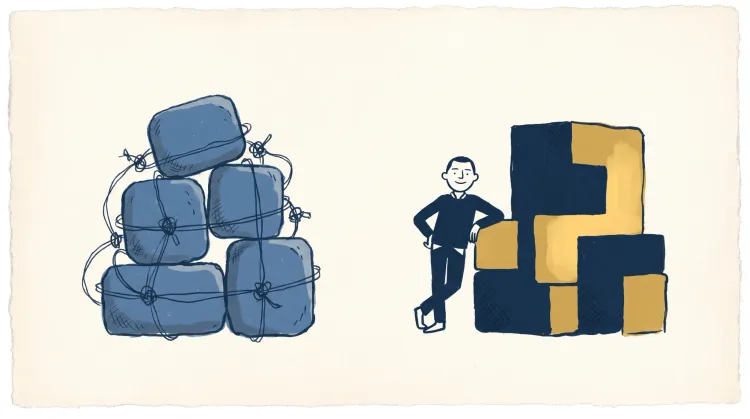
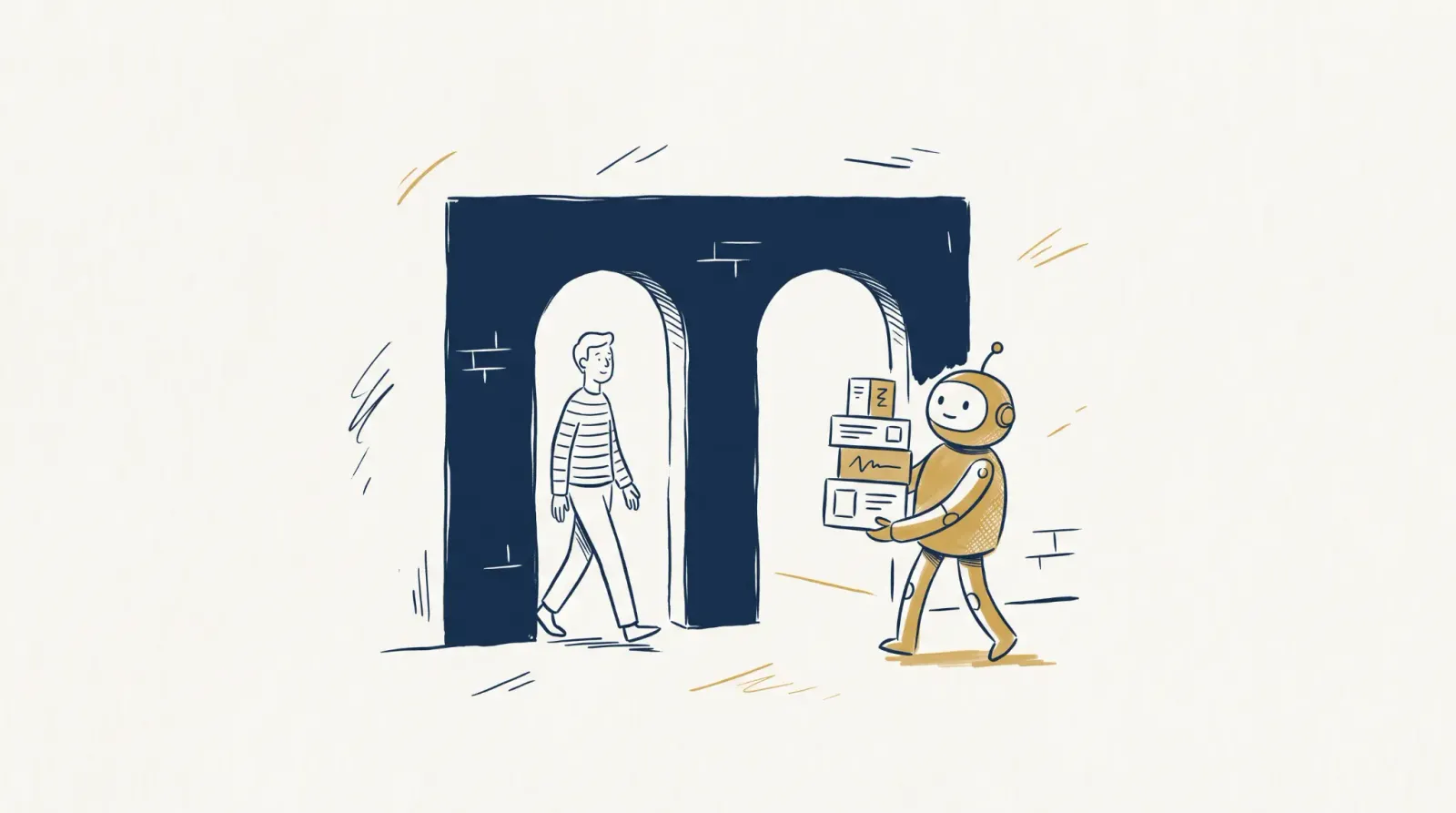
The difference comes down to what the system was designed to do. A CRM built in the 2000s was designed around a person opening a record, reading fields, and typing into them. Permissions were built for people. Workflows were built for people. The database schema assumed a human would interpret whatever was in it. Adding an agent to that system means giving software a narrow doorway into a house built for someone else. We describe how Lucrative Sales approaches this differently in our product documentation, but the principle applies whichever vendor you evaluate.
FAST FACT Anthropic donated the Model Context Protocol to the Agentic AI Foundation under the Linux Foundation in December 2025, with OpenAI and Block as co founders and AWS, Google, Microsoft and Cloudflare joining as platinum members. Agent connectivity is now vendor neutral infrastructure rather than a single company roadmap item. |
What Does AI Native Actually Mean in Practice?
Four things, and a product either has them or it does not.
The agent is a first class user of the system. Not an assistant bolted onto the interface, but an operator with its own identity, its own permissions and its own audit history. If the agent acts through a service account shared with three integrations, nobody can reconstruct who did what when something goes wrong.
The whole system is reachable. An agent that can read contacts but not quotes, or update deals but not campaign membership, is doing a fraction of the job. Scope is the single most revealing question in an evaluation, and it is rarely volunteered.
Data outside the CRM is reachable too. Most revenue truth does not live in the CRM. It lives in a warehouse, a product database, a billing system. An agent that can only see CRM records is reasoning over a partial picture and will confidently produce wrong answers.
Governance is built in rather than added. Every automated action needs a record: what the agent did, which data it used, whether a human approved it. Retrofitted systems tend to log the integration call and lose the reasoning behind it.
A product can market itself as AI powered while failing all four. That is not dishonesty on the vendor side so much as a limitation of what can be retrofitted onto a twenty year old schema.
How Is This Different From AI Features Added to an Existing CRM?
Added AI features are genuinely useful and this guide is not arguing otherwise. Email drafting, call summarisation, lead scoring and next best action suggestions all save real time, and most teams should use them.
The limitation appears when you ask the AI to do something rather than suggest something. Suggesting is a read operation on a narrow slice of data. Doing requires write access across multiple objects, an understanding of business rules, and an approval path. That is where retrofitted systems run into the boundary of what their architecture permits.
A useful way to think about it: the revenue tooling market is splitting into an observational tier that surfaces signals, and an action tier that acts on them. Forecasting and conversation intelligence tools are excellent at the first. Very few products do the second well, because the second requires architectural permission the first never needed.
This is also why the distinction matters more for some functions than others. Quoting and governance are action heavy by nature. Analytics and reporting are observation heavy. A team whose main pain is reporting may see little difference between the two architectures.
Why Does Architecture Matter for AI Agents Specifically?
Because agents fail differently from software. A traditional integration that breaks throws an error and stops. An agent operating with incomplete access does not stop. It reasons over whatever it can see and produces a confident answer built on a partial picture.
That failure mode is the reason most agent pilots stall between a working demonstration and a production approval. The demonstration works because the demonstration data is clean and the scope is controlled. Production is neither.
Three architectural properties determine whether an agent survives contact with a real revenue system. It needs consistent access across objects, so it is not guessing at what it cannot see. It needs an approval gate on consequential actions, so a wrong decision is caught before it reaches a customer. And it needs a complete audit trail, so that when something does go wrong, the reasoning can be reconstructed rather than inferred.
None of those three is a feature you can add later. They are properties of how the system was built.
FAST FACT Analysis of 12 billion Salesforce records found that 45 percent were duplicates across organisations. For records created through API integrations such as marketing automation and web forms, the duplicate rate reached 80 percent. Source: Plauti analysis, reported by MarketingProfs, February 2026 |
What Can This Architecture Do That a Traditional CRM Cannot?
Four things, described plainly rather than as feature claims. Each is difficult or impossible to retrofit onto a conventional AI sales CRM, which is why the distinction is architectural rather than cosmetic.
Act across the whole revenue system in one operation. A request such as identify accounts showing renewal risk, check their support history, draft an outreach sequence and route it for approval touches four systems. In a traditional stack this is four integrations and a person coordinating them.
Reason over data it does not own. Product usage in a warehouse, billing status in a finance system, support tickets elsewhere. If the agent has to wait for a nightly sync to see any of it, the answers are a day old.
Explain its own decisions. When a forecast changes, the useful question is why. A system with a complete audit trail can answer it. A system that logged an integration call cannot.
Operate continuously rather than on a schedule. Batch processes run overnight because that is how they were designed. An agent architecture can respond to an event within seconds of it happening.
The same reasoning applies across marketing automation, where the gap between an activity record and a revenue outcome has always been the hardest thing to close.
What Are the Limitations You Should Know About?
This section exists because a guide that only lists advantages is a sales page, and a buyer can tell the difference. Four limitations apply to every product in this category, including ours, and they should shape how you evaluate any AI CRM software you shortlist.
Data quality caps everything. An agent reasoning over a database with a 45 percent duplicate rate will produce confident, wrong answers. Architecture does not fix data. This is the single most common reason AI CRM deployments disappoint, and it is usually discovered after purchase.
The ecosystem is younger. Salesforce has fifteen years of integrations, certified consultants and community answers. A newer platform has fewer of all three. For a team that depends on a niche integration, that gap is real and should be checked before anything else.
Migration is genuine work. Moving a live revenue system is not a weekend. Any vendor who suggests otherwise is describing a demonstration rather than a deployment.
The advantage is not permanent. Salesforce and Microsoft are both shipping agent frameworks. The architectural gap is real today and narrower every quarter.
How Do You Evaluate One During a Demo?
Five questions. They are more revealing than any feature matrix, because each one has an answer the vendor cannot easily dress up.
- Can the agent read and write across every object in the system, or only within specific modules? Ask for the exceptions by name.
- Can it reach data outside the CRM without a nightly sync? If so, which systems, and is it live or scheduled?
- Show me the audit trail for one automated action. Not the log of the API call. What the agent did, which data it used, and who approved it.
- What happens when the agent is wrong? Where are the approval gates, and can I configure where they sit?
- What is your duplicate detection doing during migration? A clean architecture importing dirty data produces a clean architecture full of dirty data.
The fifth question is the one most buyers forget and most regret forgetting.
FAST FACT A Validity survey found that 44 percent of companies lose more than 10 percent of annual revenue to poor data quality. For a company at $30 million in revenue, that is $3 million. Source: Validity, reported in CRM data quality research, 2026 |
Who Actually Needs One?
Not everyone, and the honest version of this answer is worth more than an inclusive one. The same test applies whether the product calls itself an AI native CRM or a revenue operating platform, since both describe the same architectural shift from different angles.
It makes sense when your revenue data is spread across a CRM, a warehouse and several operational systems; your team has tried an AI pilot that stalled on data access or governance; you run a revenue or sales operations function that already feels the cost of fragmentation; and you have enough volume that automation changes the economics.
It does not make sense when you are under roughly twenty people and a simple CRM covers the job; you have no warehouse and no plans for one; your main pain is reporting rather than execution; or you are mid way through a major implementation of something else. Adding a second migration to an unfinished first one is how both fail.
If your difficulty is that nobody trusts the numbers, start with data quality rather than architecture. Our revenue governance module exists because that problem sits underneath almost every other one, and it is cheaper to fix first.
Frequently Asked Questions
What is the difference between an AI CRM and an AI native CRM?
Most AI CRM software has artificial intelligence features, usually drafting, summarising, scoring or suggesting. An AI native CRM was architected so agents can operate the system directly, with their own permissions and audit history. The practical test is whether the AI suggests actions or takes them. Suggesting requires read access to a slice of data. Taking action requires write access across objects, business rule awareness and an approval path, which is far harder to retrofit.
Is Salesforce built this way?
Salesforce launched in 1999 and has added substantial agentic CRM capability through Agentforce, which is a serious product. Whether that counts as AI native depends on your definition. The architecture underneath was designed for human operators and the agent layer sits on top of it. For many organisations that distinction will not matter, particularly if they already run Salesforce successfully. For teams whose data spans multiple systems and who need agents acting across all of it, the difference becomes visible quickly.
Do I need a data warehouse to use one?
Not strictly, but you get considerably less value without one. The main advantage is agents reasoning over data that lives outside the system, and if all your data is already inside the CRM, that advantage does not apply. Companies without a warehouse should weigh whether a simpler CRM plus good reporting solves the actual problem. If the plan is to build a warehouse within the year, choosing an architecture that can use it is sensible.
How long does migration take?
For a mid sized company with a reasonably clean CRM, plan for 60 to 90 days from decision to running in production. Data quality is the variable that moves that number most. A database with a high duplicate rate adds weeks, because importing dirty data into a new system simply relocates the problem. Run a data audit before you commit to a timeline, not after.
Will agents make mistakes in my CRM?
Yes, and any vendor claiming otherwise should be treated with suspicion. The question that matters is what happens next. A well designed system places approval gates on consequential actions, keeps a complete audit trail so errors can be traced, and allows configuration of where human review sits. Ask to see all three during evaluation rather than accepting a reassurance.
Is this relevant to compliance?
Increasingly so. Automated decision systems that select prospects, generate content and qualify replies came into scope of EU AI Act review from August 2026. If your revenue system makes automated decisions about individuals, the audit trail is no longer only an operational convenience. Organisations operating in the EU should map their automation stack against the risk classification framework regardless of which CRM they use.
What does AI native cost compared with a traditional CRM?
Pricing varies too widely for a useful single answer, but the comparison most buyers get wrong is scope. A traditional stack often means separate subscriptions for CRM, marketing automation, analytics and quoting, plus the engineering cost of maintaining integrations between them. Compare the consolidated cost of what you run today against the platform price, including the maintenance nobody puts on the invoice.
In summaryAn AI native CRM is one where agents are first class operators of the system rather than assistants added to the interface. Four properties define it: the agent has its own identity and permissions, it can reach every object in the system, it can reason over data held outside the CRM, and every automated action leaves a complete audit trail. A product can advertise AI powered while having none of these, which is why the term exists. The distinction is not universally important. Teams under twenty people, teams without a warehouse, and teams whose main pain is reporting rather than execution will see little difference. Where it matters is when data is fragmented across systems, when an AI pilot has already stalled on access or governance, and when automation genuinely changes the economics. Before evaluating architecture, check your data. Analysis of 12 billion Salesforce records found 45 percent were duplicates, and no architecture reasons correctly over a database like that. |
Want to see the difference rather than read about it? Book a demonstration with Lucrative, or review pricing first. Bring the five questions from this guide and ask them of us as well as of everyone else on your shortlist.